
engines
engines and trails of the expansa universe
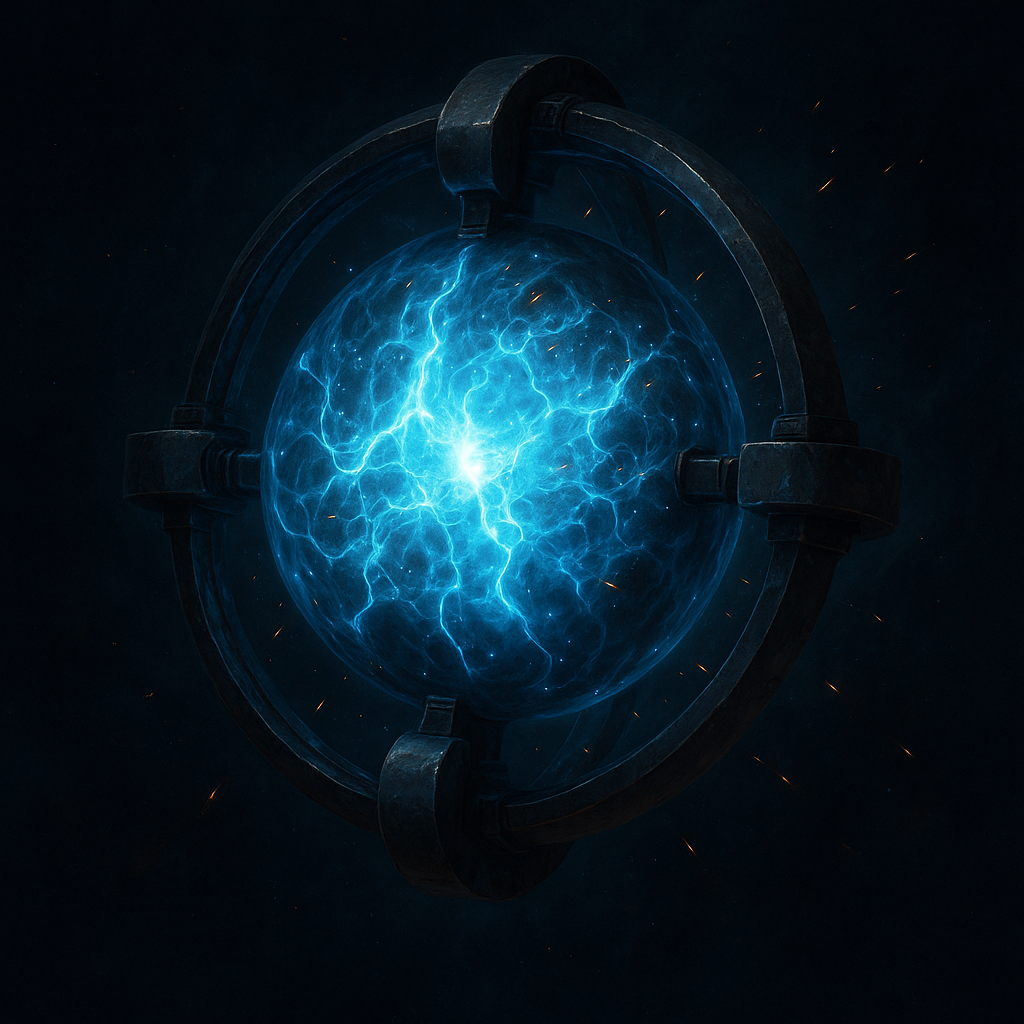
Helion Cascade Reactor
Fuel: Aetherium-3 (A-3)
Event: Cascade Snap
Particles: Photonic Embers
Behaviour: When the reactor stabilizes internal pressure waves, micro-bursts ignite and vent outward as bright Photonic Embers. The Cascade Snaps appear as directional white-hot spits behind the engine, indicating that the Helion core is active, energized, and maintaining flow balance even while idle.
Colors: White, Light Blue, Red. More soon
Scientific data available:
1. Neutron-Star Fringe Clouds
When a neutron star emits high-energy jets, some radiation recombines with exotic baryonic matter drifting nearby. Micro-pockets of A-3 condense inside these “fringe clouds.”
– Extremely high-risk to harvest
– Most stable, purest A-3
– Primary natural formation
2. Proto-Stellar Accretion Sheaths
In early star formation, immense pressure and chaotic magnetic fields allow photons to bind to exotic particles. This forms thread-like A-3 filaments inside accretion disks.
– Hard to extract
– Often embedded in collapsed rings / dense dust bands
3. Deep-Space Relic Fields
Leftovers from ancient hyperflares, supernovae, and failed black-hole ignition events. Some relic debris contains A-3 clusters locked inside crystalline lattices.
– Stable
– Easy to store
– Source of most industrial-grade A-3
4. Artificial Synthesis (Photon-Mass Convergence)
Advanced civilizations can synthesize tiny amounts of A-3 using the PMC process:
– Gigantic magnetic toroids
– Photon-confinement chambers
– Subatomic shear-fields
Yield is extremely low; only specialized reactors can manufacture grams at a time. Used for replenishment in controlled space.
5. Cosmic Rift Residue
Natural spacetime micro-rips leave behind short-lived exotic matter, some of which decays directly into Aetherium-3.
– Rare
– Dangerous
– Strongest grade of A-3